How Do Brushes Affect the Stone’s Path in Olympic Curling? Complete Guide to Curling Sweeping Techniques
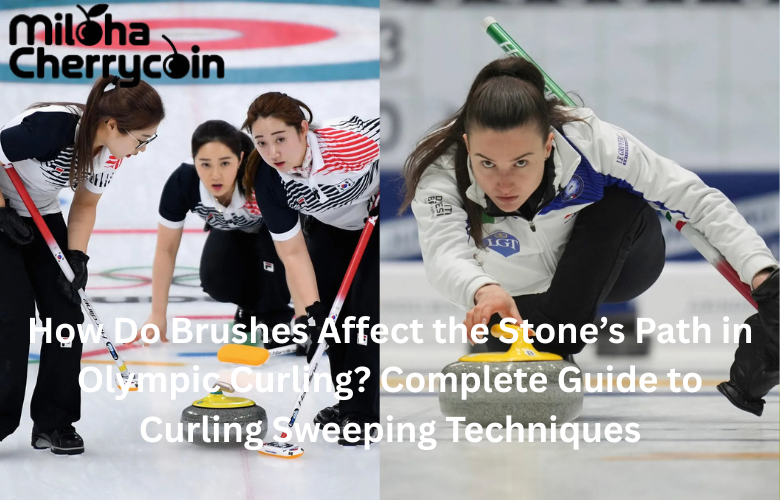
Curling in the Olympics is considered one of the most strategic and intriguing winter sports in the world. How do brushes affect the stone’s path in Olympic curling? This is often a question that casual viewers ask themselves while watching curling competitions, and the answer is actually found in a combination of friction, ice control, team work and science. In reality, curling brushes are not simple tools for cleaning ice; they are crucial devices for manipulating the path of a curling stone.
Sweepers quickly move their brushes back and forth across the ice in front of a moving curling stone. By doing so they warm the ice slightly and lessen the friction that slows down and causes the stone to curve on the ice. As a result, the stone glides farther on the ice than it would otherwise, and in a much straighter line toward the tee.
Learning how do brushes affect the stone’s path in Olympic curling helps a viewer to appreciate just how skillful and synchronized professional curlers can be when playing this game. Every stroke has an impact, and a small movement by the broom can end up changing the entire outcome of an Olympic match.
How Do Brushes Affect the Stone’s Path in Olympic Curling? Ice Friction Control
Perhaps the biggest way that brushes affect the stone’s path in Olympic curling is through ice friction control. Curling ice is usually prepared with tiny water droplets that are called pebbles, which can be used by curlers as a sort of texture for the ice that affects how the stone travels.
Sweeping the ice in front of the moving stone with a broom decreases the friction applied between the stone and the ice. By rubbing the ice lightly with a broom, the surface of the pebbles on the ice becomes less abrasive, and the smooth ice generates a slight layer of moisture that is formed by the heat of the sweeping. This action of decreasing the friction enables the stone to slide farther and more accurately toward the target area.
Since friction is decreased, the stone maintains speed longer when it is travelling, and curls less to the side. It is because of reduced friction that this question-how do brushes affect the stone’s path in olympic curling?-becomes important in understanding the skill and science of this fascinating sport.
Since they practice for years to perfect their sweeping technique, the amount of friction created by sweepers when they touch the ice with their brushes can drastically alter the location of a curling stone at the end of a shot.
How Do Brushes Affect the Stone’s Path in Olympic Curling? Changes Direction
The second way that brushing influences how do brushes affect the stone’s path in Olympic curling is in changing the direction of a stone’s movement. Curlers know that there are many factors influencing a stone to curl: primarily its rotation, but also the textured surface of the ice. By actively sweeping in front of the moving stone, curlers can slow the curve and maintain a straighter line.
It is imperative that curlers are able to make the ice as smooth as possible when trying to get the stone precisely placed near the tee. Aggressively brushing a curling stone while it is travelling will encourage it to move in a straight line over the ice rather than curl. This will help ensure accuracy, especially when a team is trying to avoid opponent stones.
For instance, if a team leader sees that the curling stone is curving too quickly to one side, sweepers might push a bit more to the side to ensure that the rock remains on a more direct path. Directional sweeping can truly make the difference between a shot that scores and one that does not.
How Do Brushes Affect the Stone’s Path in Olympic Curling? Increased Distance
Distance control is the third major variable that the sweeping brush can influence on the stone’s path. A stone may naturally lose speed and fall short if it is not propelled hard enough. The only way to get the stone further down the ice once it’s been released is to reduce friction, which helps the stone to travel as far as possible toward the target.
Players will judge how fast their stone is moving when they release it and will actively begin brushing the ice once it begins to slow down, especially if they can feel that the stone is going to fall short. The faster they brush and push, the more speed the stone can gather. A team captain will watch how fast the stone moves and communicate the required brushing velocity. It is this interaction between the brush, the speed and the team communication that influences how do brushes affect the stone’s path in Olympic curling.
How Do Brushes Affect the Stone’s Path in Olympic Curling? Team Communication
Perhaps one of the best aspects of the sport is that curling is such a team oriented game, which means that brushes are a way that team members can communicate with each other on the ice. Skippers will usually call out commands to sweepers and they must do so instantly so that the sweeper can adjust.
A team captain might call for intense brushing to hold the stone in place, or a less aggressive sweep to allow for greater distance. The team must listen to the skip and communicate to them via signals or shouting their strategy and their observation to help ensure they have the correct line and speed on the rock.
How Do Brushes Affect the Stone’s Path in Olympic Curling? Brush Technology
There is a great deal of science and skill involved in the manufacturing of curling brushes, and their use on the ice is continually evolving. Different types of brushes are being developed and approved or banned based on their influence on the curling stone.
For instance, some modern brushes have shown a surprising and at times controversial impact on how quickly and far the curling stone travels and have led to controversy in professional circles as to the fairness they bring to the game. Over time there are stricter rules being enforced in terms of the exact composition of materials used in the manufacturing of curling brushes, which helps curlers ensure they are playing under consistent conditions.
How Do Brushes Affect the Stone’s Path in Olympic Curling? Different Shot Types
When a stone is released by a player, depending on the objective of the shot, the method for sweeping varies tremendously. A guard shot will likely need sweeping from its release until it is in the optimal position so that opponent rocks cannot hit it to clear it away. A hit/take out shot will be brushed to go in a straighter line so that it makes direct contact with a desired stone.
When attempting to get a stone in a freeze position to land right in front of a particular rock, a sweeper might not touch the ice at all to allow for precise slow speed and control. These types of shots each illustrate the versatility of using brushes when they are used appropriately to answer the question: how do brushes affect the stone’s path in Olympic curling?
Learn More : Melodie Kelly: A Closer Look at the Life, Career, and Public Interest Around Melodie Kelly
Conclusion
The next time you watch a curling match, you should not just view the brooms used by the curlers as a means for cleaning the ice. They are an integral component of this exciting team sport that allows for the adjustment and control of speed, direction and distance of the curling stone while it slides across the ice. Sweepers must learn how to sweep precisely so that the best possible result is attained for each curling shot the team takes.
Frequently Asked Questions
How do brushes affect the stones travel in olympic curling?
The brushes take some friction off the ice, enabling the stone to travel further and straighter.
Why do curlers sweep in front of the stone?
Curlers brush in front of the stone to control speed, distance and the direction of the curling stone.
Does sweeping make the stone move faster?
Yes it does as sweeping allows it to conserve speed by giving it less resistance.
Can sweeping change the stones direction?
Yes as if the brush is swept to the side of the stone it makes the curl less severe making it able to travel on a straighter path.
Are Olympic curling brushes purpose built?
Yes they use technology for the perfect amount of ice control.

Post Comment